

How to Choose Your Bridal Bouquet
A look back at my favourite bouquets from this past season, with guidance on shape, trends and what works in a Tuscan setting
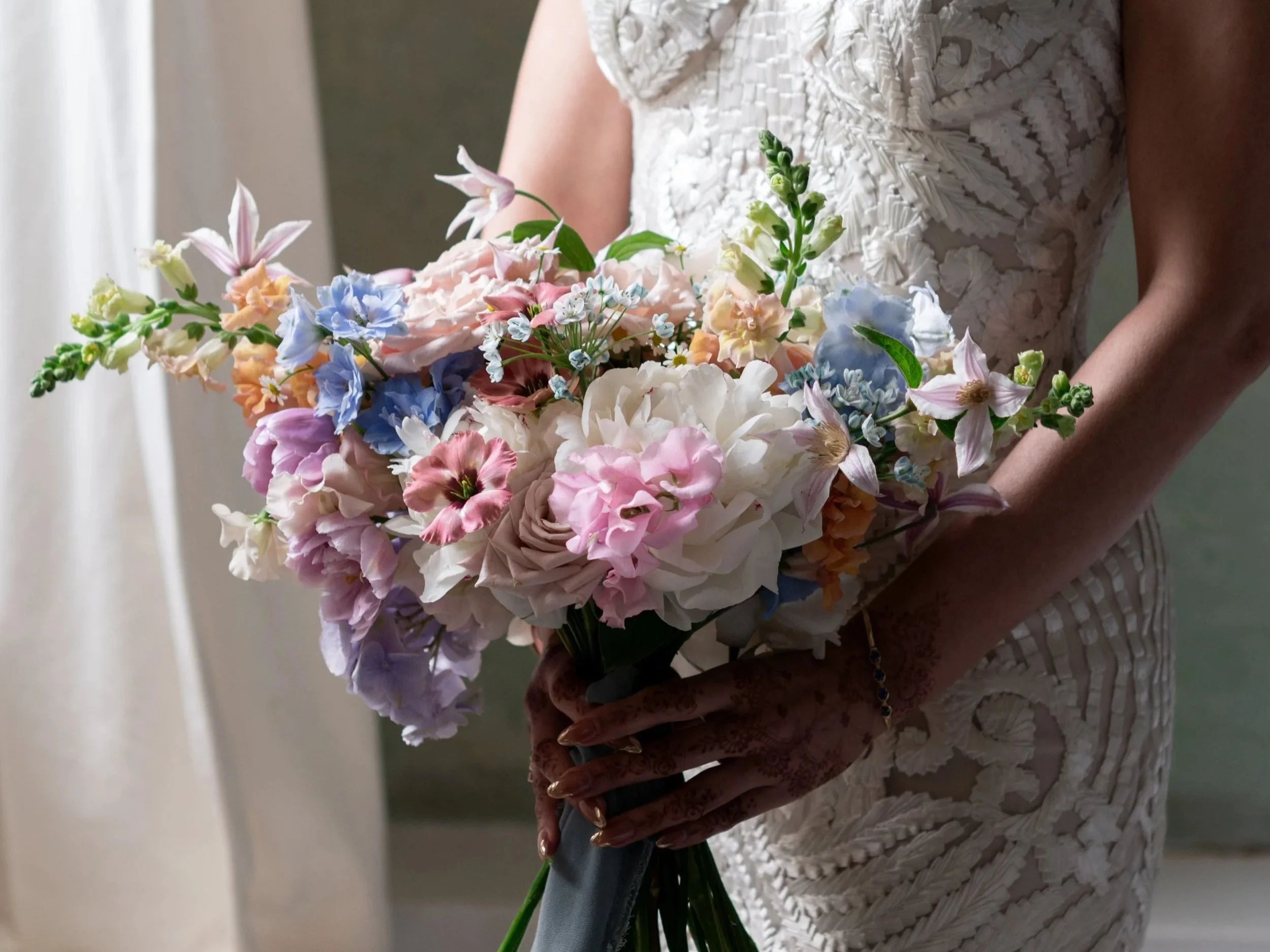
Wildflower bouquet Ph: Noniin
As the 2026 wedding season begins in Tuscany, I always find myself looking back for a moment.
Before everything moves forward again, there’s a quiet pause where I revisit some of the bouquets from last year. The ones that stayed with me. The ones that felt just right in their setting, in the light, in the hands of the person carrying them.
Each season brings something new, but these are the bouquets I return to. Not because they followed a trend, but because they worked. In feeling, in proportion, in the way they became part of the day.
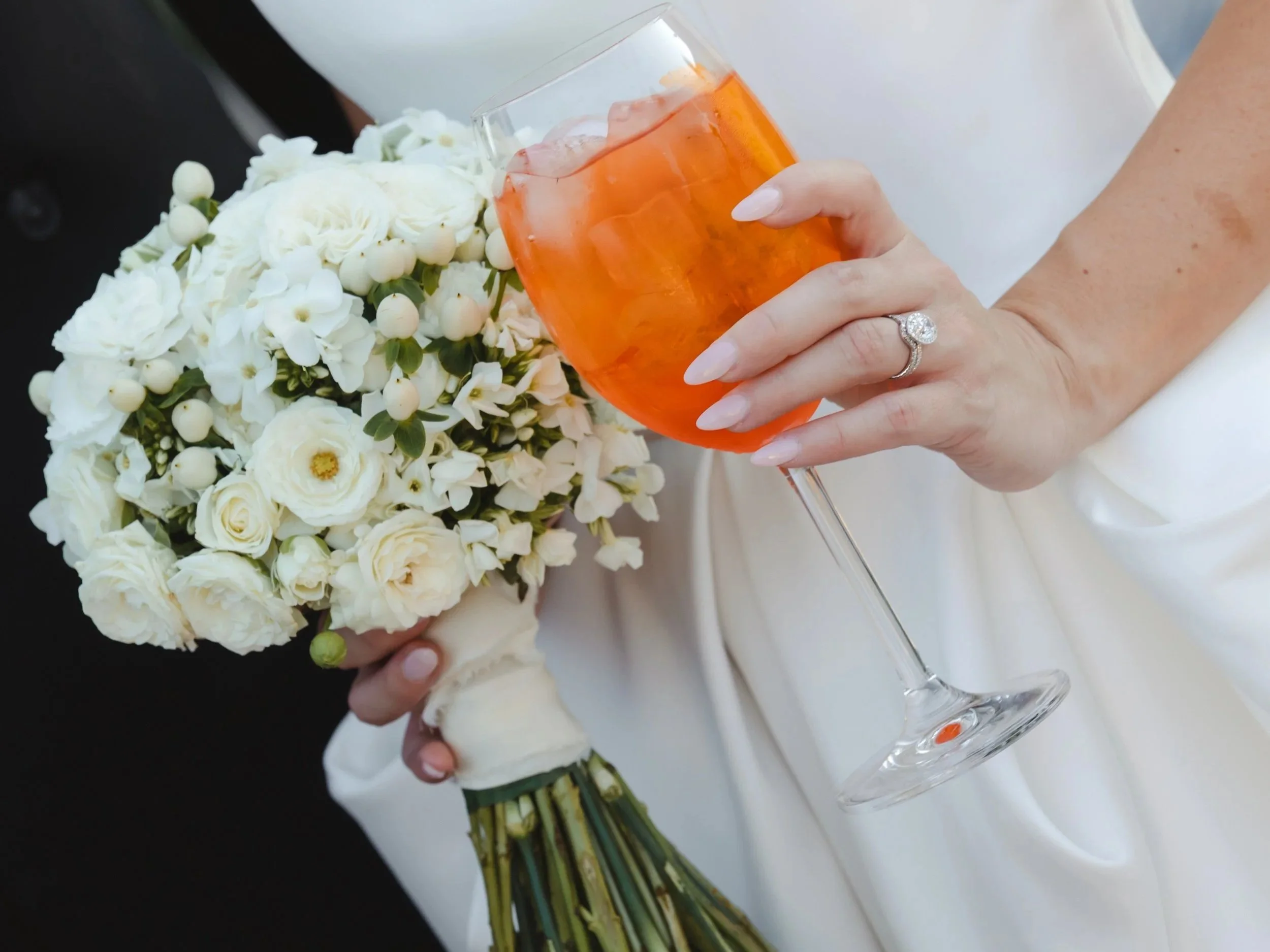
Classic white bouquet Ph: Esme Film and Photography
A Note on Current Bouquet Trends
While most of my work is guided by the setting and the person rather than trends, there are always subtle shifts worth noticing.
One we’re seeing more often is a return to structured bouquets. Calla lilies are appearing again, bringing a more defined and sculptural shape. They are often combined with flowers like amaranthus, dahlias, roses, or anthuriums, creating compositions that feel more architectural in their form.
Last season, these bouquets were often kept in green and white tones, sometimes with a touch of burgundy to introduce depth. They work particularly well with clean silhouettes and more contemporary settings, where a stronger shape can hold its own.
Alongside this, there is a quieter move towards minimal bouquets.
Often created with white roses, these designs step away from the traditional rounded shape. Instead, the roses are layered more openly, with petals sometimes gently reflexed to change their form. The result feels more modern, while still using one of the most classic and recognisable flowers.
It’s a subtle shift, but an interesting one. Moving away from a compact, structured bouquet towards something more open, and still rooted in a familiar material.
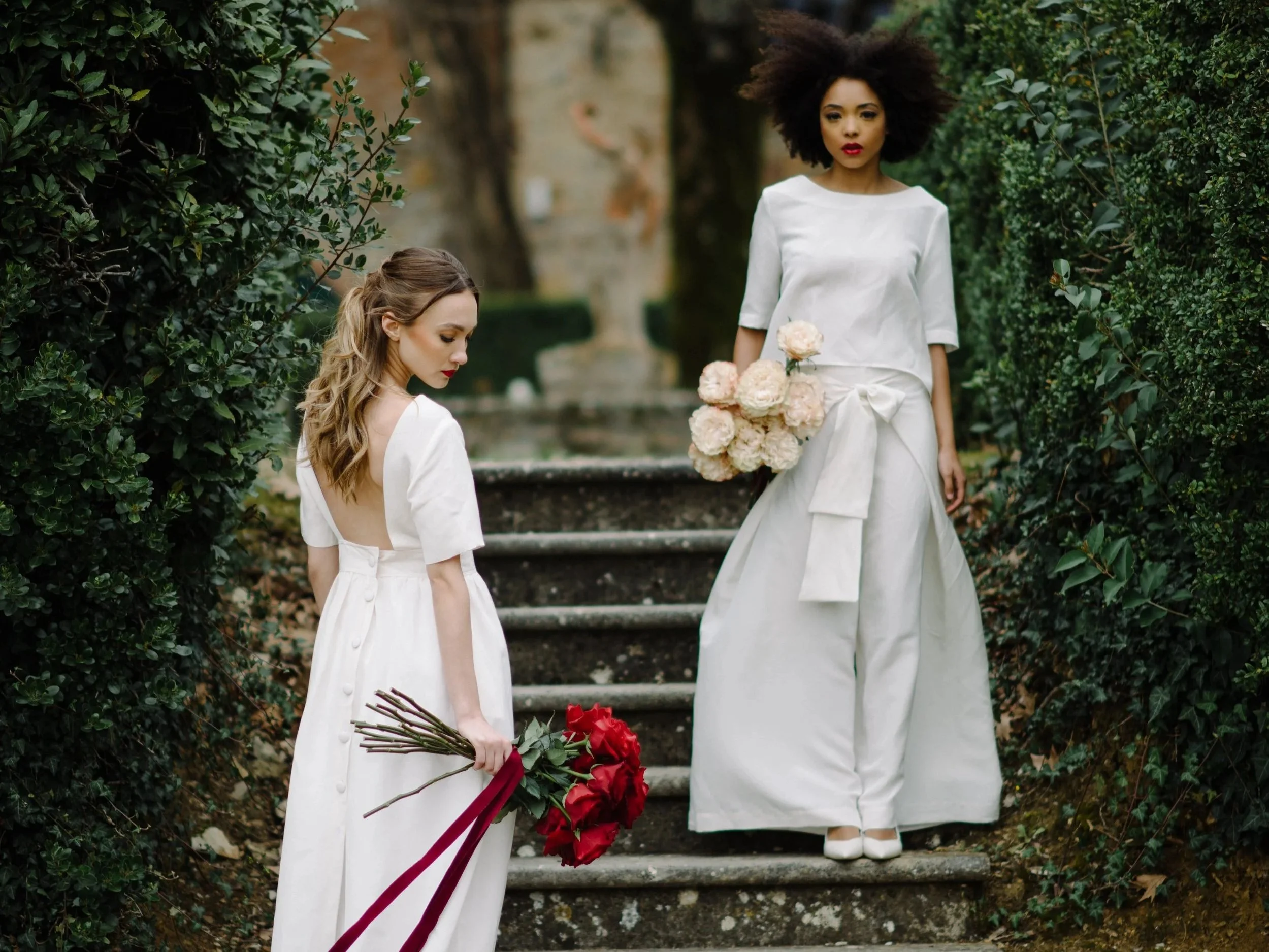
Long stemmed bouquets Ph: Milos Dokmanovic
Finding Your Bridal Bouquet Style
There isn’t one right bouquet. It depends on how you want to feel, what you’re wearing, and where the wedding takes place.
Here are some of the most recognisable bridal bouquet styles, each with a different presence.
Garden-style bouquet
Loose, natural, and softly structured. Sometimes also described as organic, this style feels as if it has been gathered rather than arranged. It works especially well in outdoor settings and pairs easily with flowing fabrics. The shape is relaxed, but never uncontrolled.
Cascading bouquet
A more directional composition, where flowers fall gently downwards. It creates movement and draws the eye vertically, which can work beautifully with longer silhouettes or more formal settings.
Classic round bouquet
Compact and balanced, with a clearly defined shape. This style feels composed and works well when the dress already carries detail or structure.
Minimal bouquet
Reduced in composition, often using a single variety or a very limited palette. This style feels precise and works well in architectural settings or with clean, modern silhouettes.
Structured bouquet
More defined in shape, with a sculptural quality. Calla lilies are often at the centre of this style, sometimes combined with amaranthus, dahlias, roses, or anthuriums. These bouquets have been appearing more frequently, often in green and white tones, or with touches of burgundy for added depth. They suit contemporary settings where a stronger form can stand on its own.
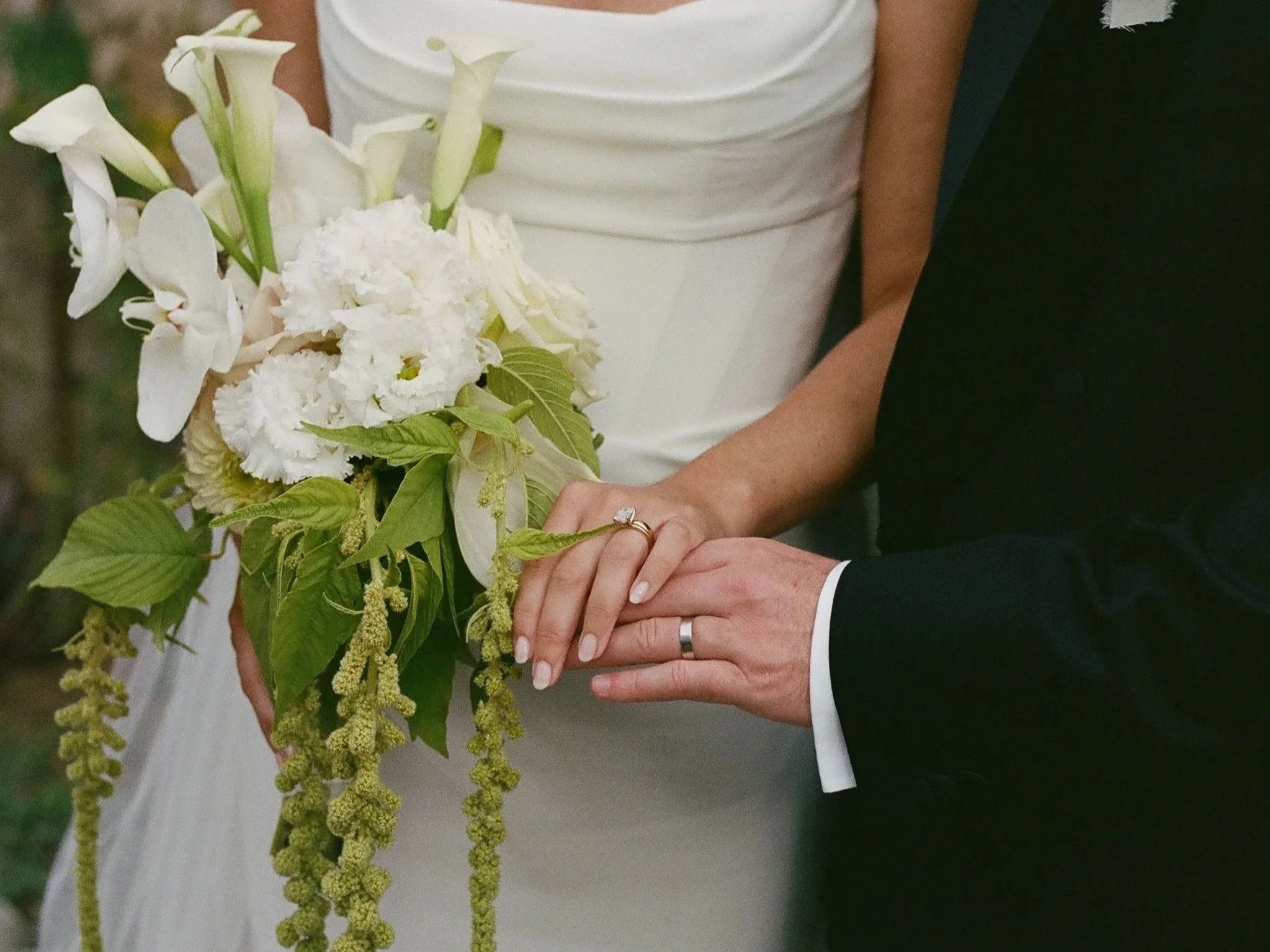
Contemporary bouquet Ph:
Should You Keep Your Bouquet?
Many couples still like the tradition of a bouquet toss, but it doesn’t mean you have to part with your own. A second, simpler bouquet can be made for this moment, allowing you to keep the original as a memory from the day.
How to Hold Your Bouquet
Hips not Tits! This small detail makes a big difference in photographs. Hold the bouquet slightly lower, around waist level, and angle it gently forward. This keeps the shape visible and avoids hiding the dress or your face.
A Final Thought
Your bridal bouquet is not just an accessory. It’s something you carry through the entire day. It moves with you, appears in every image, and quietly holds everything together. The best choice is not the most elaborate one, but the one that feels natural in your hands.
You can see more of these bouquets in my recent weddings here.
Bridal Bouquet FAQ
How do I choose my bridal bouquet?
I usually suggest starting with the flowers and colours you naturally gravitate towards. Look for inspiration, notice what you keep coming back to, and go with what you love. From there, the bouquet can be shaped to sit comfortably with your dress and the setting
What is the most popular bridal bouquet style?
Garden-style bouquets are still the ones I’m asked for most often. That said, there’s been a quiet shift towards more structured shapes and simpler, more reduced designs.
Should I keep my bridal bouquet?
That is entirely up to you. Many brides choose to have their bouquet dried or preserved, sometimes framed by a professional, so it becomes something you can keep beyond the day. If you still like the tradition of a bouquet toss, a second, simpler version can always be made for that moment.